Card Precision Meets Reel Volatility: Layering Surrender Options with Cascade Features to Clear Wagering in Portable Gaming Ecosystems
Written by Carlo Powell · Aug 27, 2026

Card Precision Meets Reel Volatility: Layering Surrender Options with Cascade Features to Clear Wagering in Portable Gaming Ecosystems
Portable gaming ecosystems continue to evolve as developers integrate precise card mechanics from blackjack with the unpredictable sequences found in slot cascades, and these combinations appear in multiple platforms that handle bonus wagering requirements through layered feature use. Data from industry reports indicate that players navigate surrender decisions in blackjack rounds alongside cascade multipliers in adjacent slot sessions, creating sequences that align with clearance thresholds set by operators.
Core Mechanics in Mobile Blackjack and Slot Integration
Blackjack surrender options allow participants to forfeit half their wager after the initial deal when the dealer shows strong upcards, and this choice reduces overall exposure while preserving remaining funds for continued play. Slot cascade features trigger successive symbol drops after winning combinations clear from the grid, and each new alignment generates additional payouts without extra stakes. Observers note that portable systems often link these elements through shared bonus pools, where progress in one game type influences eligibility in the other.
Research from the University of Nevada, Las Vegas gaming studies shows that surrender frequencies rise when players track dealer patterns across multiple hands, while cascade chains in slots extend session lengths through repeated symbol replacements. Those who combine the two report structured approaches that match surrender timing with cascade triggers to accumulate required wagering volumes more efficiently in app-based environments.
Layering Strategies Across Device Platforms
Portable applications frequently embed cross-game trackers that monitor wagering progress in real time, and users apply surrender moves to stabilize bankrolls during high-volatility cascade sequences. This layering occurs when a player completes a blackjack hand with a surrender, then shifts immediately to a slot round where cascades activate, and the combined activity counts toward a single clearance target. Figures from the Canadian Centre on Substance Use and Addiction reveal that mobile sessions incorporating both feature sets show extended play durations compared with isolated game use.
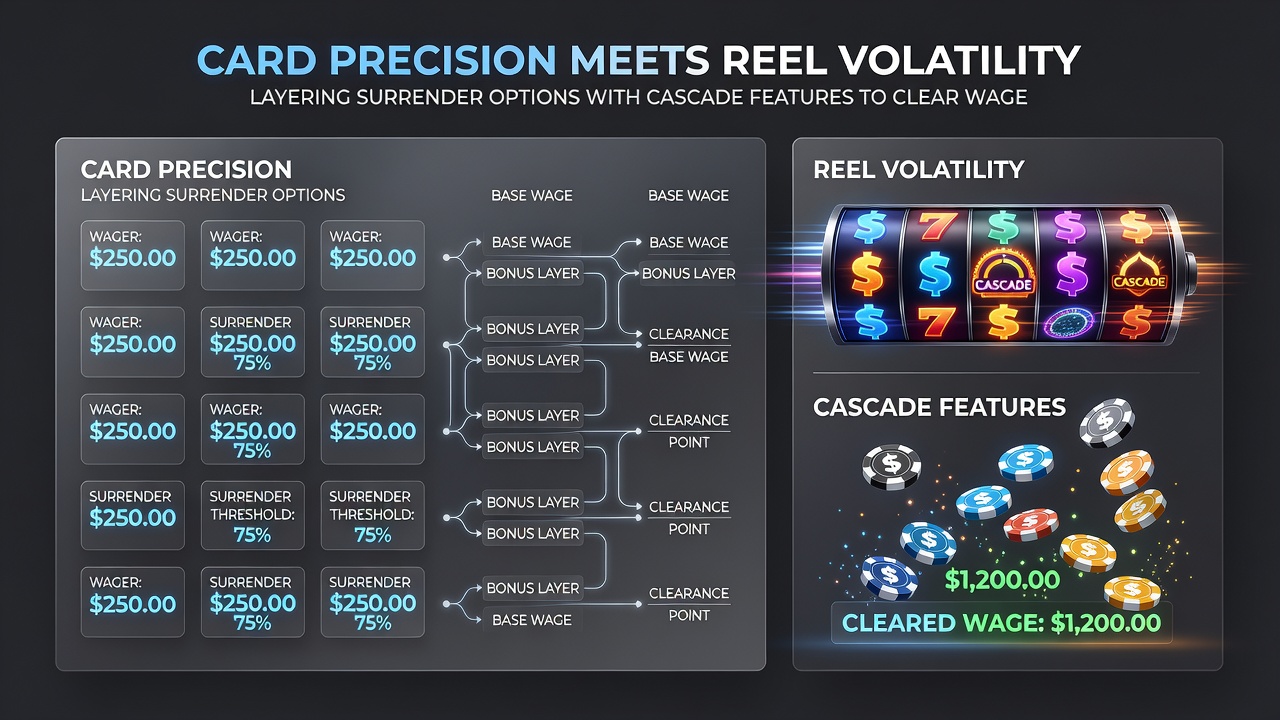
Developers have introduced unified interfaces by August 2026 that permit seamless transitions between table and reel displays, and these updates allow simultaneous tracking of surrender outcomes and cascade multipliers within the same dashboard. One analysis of European gaming platforms found that such integration reduces the number of separate sessions needed to meet bonus conditions, as activity from both mechanics feeds into a shared meter. Players often alternate between a single surrender decision and a multi-cascade spin cycle, and the resulting point accumulation follows predictable patterns tied to game rules rather than random chance alone.
Regulatory Context and Platform Adaptations
Authorities in multiple regions enforce transparency requirements around how surrender and cascade contributions factor into wagering calculations, and operators must display these ratios clearly within mobile interfaces. The Nevada Gaming Control Board maintains guidelines that require clear disclosure of feature interactions in digital products, and similar standards appear in Australian regulatory frameworks that monitor remote gaming systems. These rules ensure that the mathematical impact of layered surrender and cascade use remains visible to participants throughout each session.
Platform updates scheduled around mid-2026 incorporate refined algorithms that adjust cascade probabilities based on recent surrender activity, and this synchronization helps maintain consistent wagering flow across devices. Data collected by independent research groups indicate that such adaptations appear more frequently in markets where mobile penetration exceeds 70 percent of total gaming activity.
Observed Patterns in Player Behavior
Those who study mobile gaming logs document cases where individuals complete surrender sequences first to lower risk exposure, then enter cascade-heavy slot rounds to accelerate remaining requirements. This order produces measurable differences in total hands and spins needed, according to aggregated session data from various operators. The approach relies on the fixed rules governing each feature, and the interaction creates measurable progress toward clearance without altering underlying game mathematics.
External reports from academic sources confirm that portable ecosystems support these combined tactics through built-in timers and progress indicators, and users reference these tools to coordinate moves across game types. Patterns emerge most clearly in applications that allow background tracking while users switch between blackjack tables and slot grids.
Conclusion
Integration of surrender options with cascade features continues to shape wagering clearance processes within portable gaming systems as of 2026, and the documented mechanics provide structured pathways for activity accumulation. Regulatory bodies across regions maintain oversight of these interactions, while platform developers refine interfaces to support layered feature use. Available data illustrate how card precision and reel volatility combine under existing rules to influence session outcomes in mobile environments.